Trade deficits are often portrayed as a sign of economic weakness. Politicians warn that importing more than exporting “hollows out” domestic industry and weakens national currencies. But the relationship between trade deficits and currency valuation is far more complex—and often misunderstood.
Understanding Trade Deficits
A trade deficit occurs when a country imports more goods and services than it exports. On its own, this says little about economic health. Trade deficits are influenced by:
- Consumer demand
- Investment flows
- Savings behavior
- Currency strength
Crucially, trade balances are part of the current account, which must be offset by the capital account. This accounting identity is key to understanding currency movements.
Do Trade Deficits Weaken Currencies?
In theory, persistent trade deficits should put downward pressure on a currency, as more domestic currency is sold to buy foreign goods. However, in practice, this relationship is often reversed.
Countries like the United States have run large trade deficits for decades, yet the U.S. dollar remains one of the strongest and most demanded currencies in the world.
Why?
The Capital Flow Channel
Trade deficits are often the mirror image of capital inflows. When foreign investors buy:
- Government bonds
- Stocks
- Real estate
They must first buy the local currency. These capital inflows can strengthen the currency, even as the trade deficit widens.
In this framework, the trade deficit is not a sign of weakness, but a reflection of a country’s attractiveness as an investment destination.
Savings, Not Trade Policy
Economists often emphasize the savings–investment identity. Countries with low domestic savings and high investment demand will run trade deficits regardless of tariffs or exchange rate management.
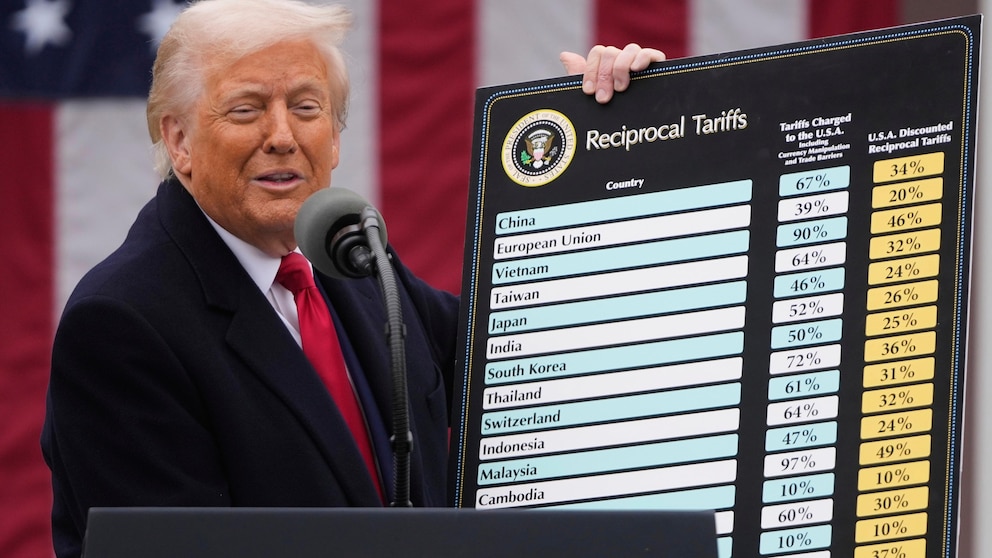
This explains why trade policy alone rarely fixes deficits. Tariffs may shift trade patterns, but they do not change underlying savings behavior.
When Trade Deficits Do Matter
Trade deficits become problematic when they are:
- Debt-financed rather than equity-financed
- Concentrated in low-productivity imports
- Paired with weak institutions or inflation
In emerging markets, large deficits can trigger currency crises if foreign capital suddenly reverses.
Bottom Line
Trade deficits do not mechanically weaken currencies. In many cases, strong currencies cause trade deficits, not the other way around. The real drivers are capital flows, savings behavior, and investor confidence—not the trade balance alone.
Understanding this distinction is essential for interpreting global imbalances without falling into simplistic narratives.