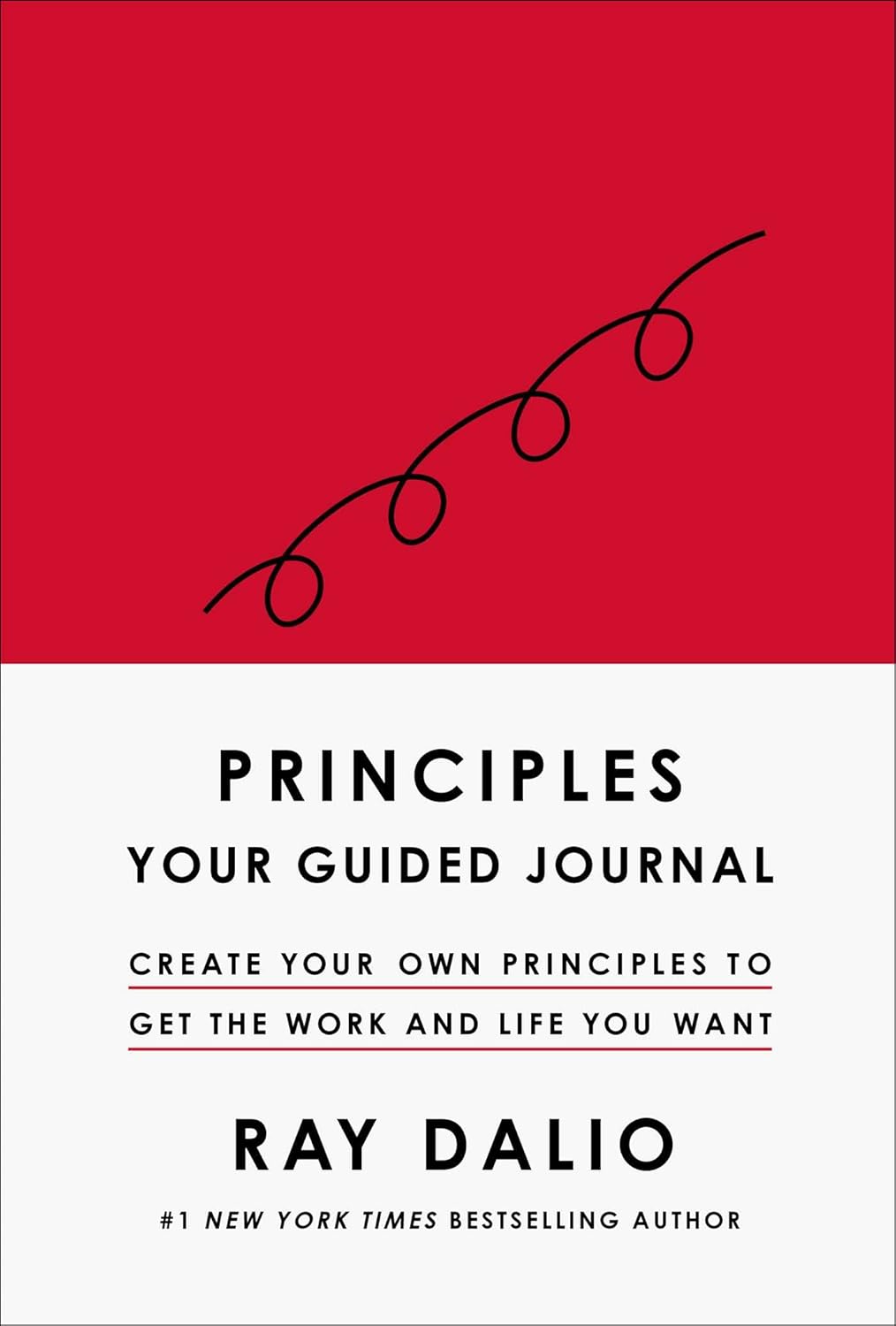
Ray Dalio founded Bridgewater Associates in 1975 from his two-bedroom apartment. Today, it is the largest hedge fund in the world. Dalio’s career is defined by his “global macro” approach—studying the massive “machine” of the economy. After a devastating loss in the early 1980s that nearly bankrupted him, Dalio realized he needed to systematize his decision-making process to remove ego and emotion.
Principles is an attempt to document every “if/then” scenario Dalio has encountered in his career. He views life and business as a series of cause-and-effect relationships. The book introduced “Radical Transparency” and “Idea Meritocracy” to the corporate world—the idea that everyone should be able to criticize anyone, provided the goal is finding the truth.
-
The Strength: The “Life Principles” section is incredibly empowering. His 5-step process for evolving (Setting goals, identifying problems, diagnosing causes, designing a plan, and executing) is a highly effective framework for personal growth.
-
The Weakness: The “Work Principles” section can feel cold or even “cult-like” to some. The level of transparency he demands (recording every meeting, constant peer evaluation) is difficult to implement in most company cultures. Critics often argue that his “machine” analogy for humans ignores the nuance of emotional intelligence.