Advanced Micro Devices (AMD) has undergone one of the most remarkable transformations in the technology sector over the past decade. From its early beginnings as a smaller competitor to Intel in CPUs and Nvidia in graphics, AMD has re-emerged as a true innovator in high-performance computing, data center processors, and artificial intelligence hardware. Today, the company stands at the center of a computing revolution driven by AI, cloud computing, and next-generation data centers.
Humble Origins and Early Challenges
Founded in 1969 by Jerry Sanders and others, AMD initially focused on producing logic chips and later became a second source supplier of Intel CPUs. For much of its early history, AMD was seen as a lower-cost alternative to Intel without major technological differentiation. The 2000s and early 2010s were marked by financial struggles, product delays, and ongoing competition with larger rivals.
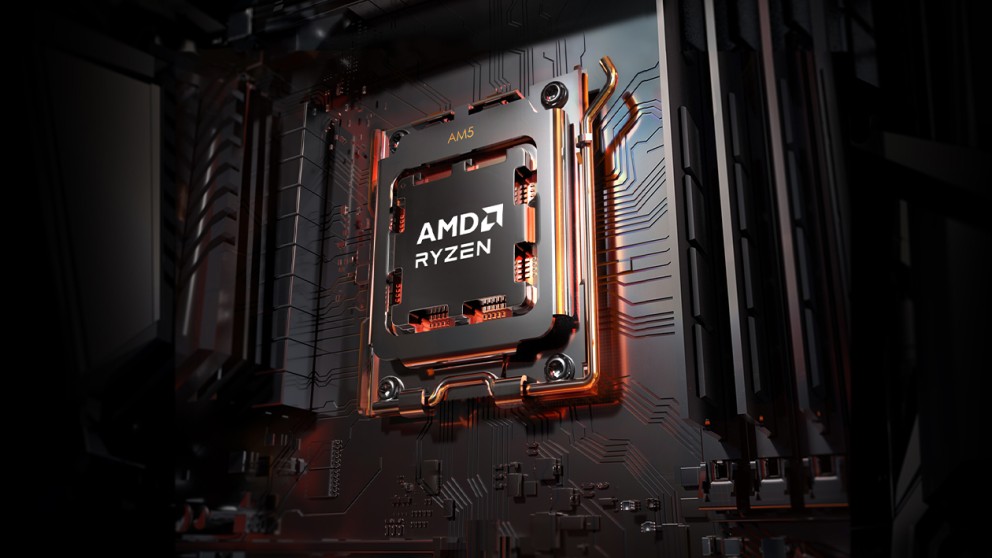
The company’s fortunes began to shift with the launch of its “Zen” microarchitecture in 2017, which revitalized its CPU lineup under the Ryzen brand. Zen offered competitive performance and efficiency, allowing AMD to regain market share in both consumer and enterprise segments. This marked a turning point — AMD was no longer just a budget alternative but a first-rate competitor.
Growth Through Innovation
Ryzen and EPYC: The CPU Renaissance
AMD’s successful Ryzen processors quickly became favorites among gamers, creators, and PC enthusiasts, challenging Intel’s dominance in the consumer market. The company didn’t stop there. Its EPYC server processors began gaining traction with cloud providers and enterprise customers, offering strong performance and energy efficiency that appealed to data center operators. By mid-2025, AMD was powering more than 170 supercomputers on the Top500 list, including the top two systems, illustrating its growing influence in high-performance computing.
Graphics and AI Hardware
Beyond CPUs, AMD expanded its graphics offerings with Radeon GPUs and, more recently, with the Instinct series designed specifically for AI and data center workloads. These accelerators aim to compete with NVIDIA’s GPUs, which have long dominated the AI training market. Analysts have noted that AMD’s latest AI chips — such as the MI350 Series — deliver performance that can rival Nvidia’s Blackwell GPUs, a significant achievement for the company.
Strategic Partnerships and Market Expansion
AMD’s strategy has evolved beyond hardware alone. Key partnerships and collaborations highlight its expanding role in the future of AI and cloud computing.
One of the most noteworthy deals is a multi-year chip-supply agreement with OpenAI, positioning AMD as a key hardware supplier for one of the leading AI research and deployment companies. Under this deal, AMD will provide GPUs equivalent to about six gigawatts of computing capacity, with an initial deployment of 1 gigawatt scheduled for the second half of 2026. OpenAI also has the option to acquire up to 10% ownership in AMD, which signifies deep mutual commitment and could generate tens of billions of dollars over several years.
Other major cloud providers — including AWS and Oracle Cloud Infrastructure — are expanding offerings powered by AMD EPYC processors and Instinct GPUs. Oracle, for example, plans massive deployments of AMD’s rack-scale AI infrastructure, further validating AMD’s growing role in the enterprise AI landscape.
Financial Performance and Momentum
The financial results of 2025 demonstrated AMD’s strong growth trajectory. The company reported record revenue of $9.2 billion in the third quarter of 2025, a 36% year-over-year increase, along with significant profitability improvements and strong cash generation. Demand was broad-based, with particularly strong contributions from data center CPUs, client processors, and AI accelerators.
Earlier in the year, AMD also delivered strong revenue and continued growth in key segments, although it faced some challenges, such as inventory impacts from U.S. export controls on certain GPU products.
Market analysts are optimistic about AMD’s prospects heading into 2026 and beyond. Earnings estimates suggest substantial growth in 2025 and 2026, driven by increased AI and data center demand. Investor sentiment has pushed AMD’s stock higher, with analysts raising price targets based on expectations of broadening enterprise adoption and profitable scaling.
Challenges and Competitive Landscape
Despite this success, AMD still faces notable challenges.
Competition with Industry Giants
AMD competes directly with Intel in CPUs and NVIDIA in AI accelerators. While its products have made significant inroads, NVIDIA continues to hold a dominant share of the AI training market, particularly in high-end data center GPU deployments.
Geopolitical and Supply Dynamics
Export restrictions and geopolitical tensions — particularly regarding sales of AI chips to China — have posed challenges. Leadership has signaled a willingness to adapt strategy to maintain market presence despite regulatory hurdles.
Supply chain constraints, including access to advanced manufacturing nodes and semiconductor supply agreements, also play a role in shaping AMD’s competitive positioning.
Leadership and Strategic Vision
Under the leadership of CEO Dr. Lisa Su, AMD has shifted from a struggling underdog to one of the most innovative companies in semiconductors. Su’s vision emphasizes performance, efficiency, open ecosystems, and strategic partnerships — a combination that has fueled both revenue growth and relevance in high-growth markets.
Current Condition and Outlook
As of early 2026, AMD is at an inflection point where its strategic investments in AI and high-performance computing are beginning to bear fruit. The company’s strengths include:
- Broad product portfolio: From Ryzen and EPYC CPUs to Instinct AI accelerators and embedded solutions, AMD offers competitive technologies across multiple computing segments.
- Expanding partnerships: Deals with OpenAI, cloud providers, and enterprise customers reinforce its credibility and revenue opportunities.
- Financial growth: Record revenues and strong margins reflect both market demand and disciplined execution.
Looking ahead, analysts forecast continued double-digit to high-double-digit growth rates, with data center and AI segments poised to be major drivers. AMD aims to further expand market share in server CPUs and AI hardware — fields traditionally dominated by larger incumbents.
However, execution risk remains — particularly regarding competition, product timelines (like the MI450/MI500 AI chip series), and global market access. Success in these areas will determine whether AMD can sustain its momentum and reshape the future of computing.
Conclusion
From revitalizing its core CPU business to staking a claim in AI and cloud infrastructure, AMD’s rise is one of the most compelling narratives in modern technology. While challenges persist, its strategic direction, expanding partnerships, and technological achievements position AMD not just as a competitor, but as a significant force shaping the future of high-performance computing and artificial intelligence.