For decades, the debate between active and passive investing has been framed as a clash of philosophies. On one side are active managers—highly paid professionals armed with models, meetings, and market intuition—seeking to outsmart the market. On the other are passive investors, content to buy the index and accept average returns at minimal cost.
In reality, this debate is less philosophical than mathematical. And the math, especially after fees, has been unforgiving to active management.
Two Approaches, One Market
At its core, the distinction is simple.
Active management involves selecting individual stocks (or bonds), timing entries and exits, and attempting to outperform a benchmark such as the S&P 500. Success depends on skill, information, discipline, and often a bit of luck.
Passive management, by contrast, makes no attempt to outthink the market. It simply seeks to replicate the performance of an index by holding its constituents in proportion. The goal is not to win, but not to lose.
Both approaches operate in the same market. Both face the same underlying returns. The difference lies in costs and expectations.
Fees: The Silent but Relentless Drag
The primary advantage of passive investing is not superior insight—it is low fees.
A typical active equity mutual fund charges between 0.75% and 1.50% per year in management fees. On top of that come trading costs, taxes from turnover, and occasionally performance fees. These expenses compound quietly, year after year.
By contrast, a passive ETF tracking a major index may charge as little as 0.03% annually. For the investor, this difference may seem trivial in a single year. Over a decade or more, it is anything but.
Fees are one of the few variables in investing that are guaranteed. Markets may rise or fall. Managers may have good years or bad ones. Fees, however, are deducted every year—regardless of performance.
The Arithmetic of Alpha
This is where the math becomes merciless.
Suppose the market returns 8% in a given year. A passive investor holding a low-cost ETF might capture 7.97% after fees. An active fund charging 1% would deliver only 7%—unless it beats the market.
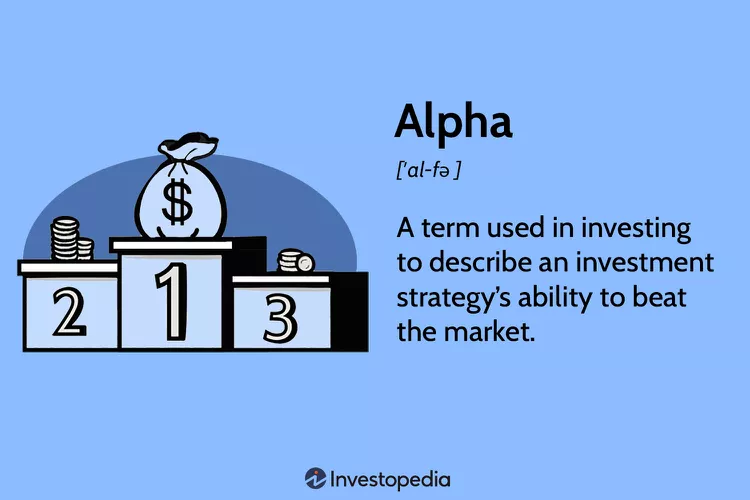
To provide its investor with just 1% of excess return, the active manager must outperform the market by roughly 2% before fees, once management costs and trading expenses are included.
This is a high bar.
Markets are competitive. Prices reflect the collective judgment of millions of participants, many of them professionals. Finding consistent mispricings large enough to overcome fees is exceptionally difficult—especially in well-covered areas like U.S. large-cap stocks.
The Evidence Over Time
The data bears this out.
Over rolling 10-year periods, roughly 90% of active large-cap equity managers fail to beat their benchmark after fees. This is not a short-term anomaly. It is a persistent pattern observed across decades and markets.
Some managers do outperform. But identifying them in advance is notoriously difficult. Past performance, the most commonly cited indicator, has proven to be a poor predictor of future success.
Even managers who outperform in one period often revert to the mean in the next. Persistence of alpha is rare.
For investors, this creates a sobering reality: while someone must beat the market before fees, most investors will not after fees.
Capital Flows Follow the Math
Unsurprisingly, capital has followed the arithmetic.
Over the past two decades, trillions of dollars have flowed out of active mutual funds and into passive vehicles. Firms like Vanguard, BlackRock, and State Street have grown into financial behemoths, largely by offering low-cost index products.
This migration has reshaped markets. Passive funds now own significant portions of many public companies, often becoming the largest shareholders by virtue of scale rather than conviction.
For individual investors, the appeal is straightforward: lower costs, predictable exposure, and freedom from manager selection risk.
For the asset management industry, it has been a reckoning.
Are All Active Strategies Doomed?
Not quite.
The failure of active management is not uniform across all markets. Evidence suggests that active strategies may fare better in areas where markets are less efficient—such as small-cap stocks, emerging markets, distressed credit, or certain niche strategies.
In these segments, information is scarcer, liquidity is lower, and prices may deviate more meaningfully from fundamentals. Even here, however, success is uneven and fees remain a formidable hurdle.
The lesson is not that active management never works, but that it must clear a much higher bar to justify its costs—especially in highly efficient markets.
The Passive Paradox
As passive investing grows, a new concern has emerged: if everyone is passive, who is doing the price discovery?
Markets rely on active participants to analyze companies, assess risks, and set prices. Passive funds do not evaluate fundamentals; they buy and sell based on index rules. If passive ownership becomes too dominant, some fear that prices could drift away from intrinsic value, increasing volatility or misallocation of capital.
This concern is not purely theoretical. In certain market segments, passive flows can amplify momentum—pushing money into stocks as they rise and withdrawing it as they fall, regardless of fundamentals.
Yet for now, active management remains sufficiently large to anchor price discovery. Even if passive funds dominate asset ownership, active traders still dominate trading volume, which is what actually sets prices.
The paradox, then, is unresolved but not yet destabilizing.
What This Means for Investors
For most long-term investors, the implications are clear.
After fees, passive investing has proven extraordinarily difficult to beat. Low costs, broad diversification, and consistency matter more than storytelling or star managers. Accepting market returns—and minimizing the slice taken by intermediaries—has been a winning strategy for decades.
Active investing still has a role, but it should be approached with humility and precision. Investors must understand where and why an active strategy has an edge—and whether that edge is large enough, persistent enough, and cheap enough to survive fees.
Hope is not a strategy. Math is.
The Bottom Line
The active versus passive debate is often framed as art versus science, intuition versus automation. In truth, it is a battle between human ambition and arithmetic reality.
Before fees, active managers as a group must match the market—because they are the market. After fees, they must lose—because costs subtract from returns.
This does not mean markets are perfectly efficient or that skill does not exist. It means that capturing that skill, net of costs, is far harder than marketing brochures suggest.
In investing, as in physics, gravity always wins. Fees are gravity.
And the longer the time horizon, the heavier they become.