If you stand in our neighborhood long enough, you’ll notice a rhythm. There are years when every shop is full and the air smells like success, and years when the tea stalls are quiet and people walk with heavier steps. This isn’t random; it is the Business Cycle—the natural expansion and contraction of economic activity.
The Four Phases of the Breath
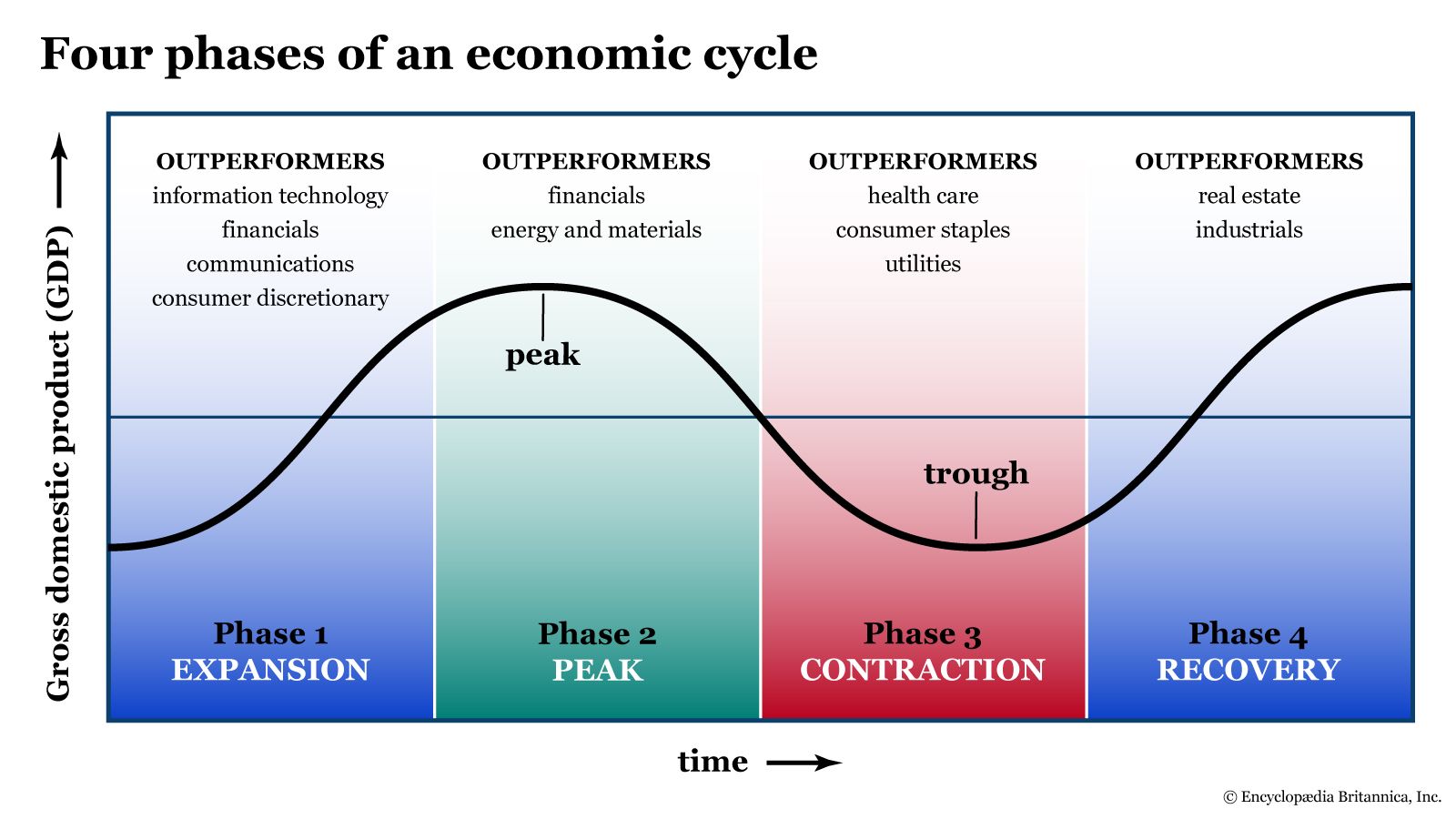
Economists generally break this “breath” into four distinct movements:
-
Expansion (The Inhale): This is the “Boom.” Confidence is high. People buy more tea, Mojumdar expands his shop, and businesses hire more workers. GDP grows, and the “Mental Bandwidth” of the neighborhood is focused on growth.
-
Peak (The Breath Held): The economy “overheats.” Demand starts to outstrip what we can actually produce. Prices rise (inflation), and the central bank begins to get nervous. This is the moment before the exhale.
-
Contraction (The Exhale): This is the “Bust” or Recession. Fear replaces confidence. Businesses cut costs, unemployment rises, and the “Policy-Captured” markets often tumble.
-
Trough (The Empty Lungs): The bottom. Economic activity hits its lowest point. But in this silence, the seeds of the next boom are sown as prices become so low that investors start to see value again.
Why Can’t We Just Have a Constant Boom?
The reason we “bust” is often due to Credit and Psychology. During a boom, borrowing is easy. People take out loans to buy houses or expand businesses based on the assumption that tomorrow will be better than today. This creates “Asset Bubbles.” When the reality of the debt outweighs the actual productivity of the economy, the bubble pops.