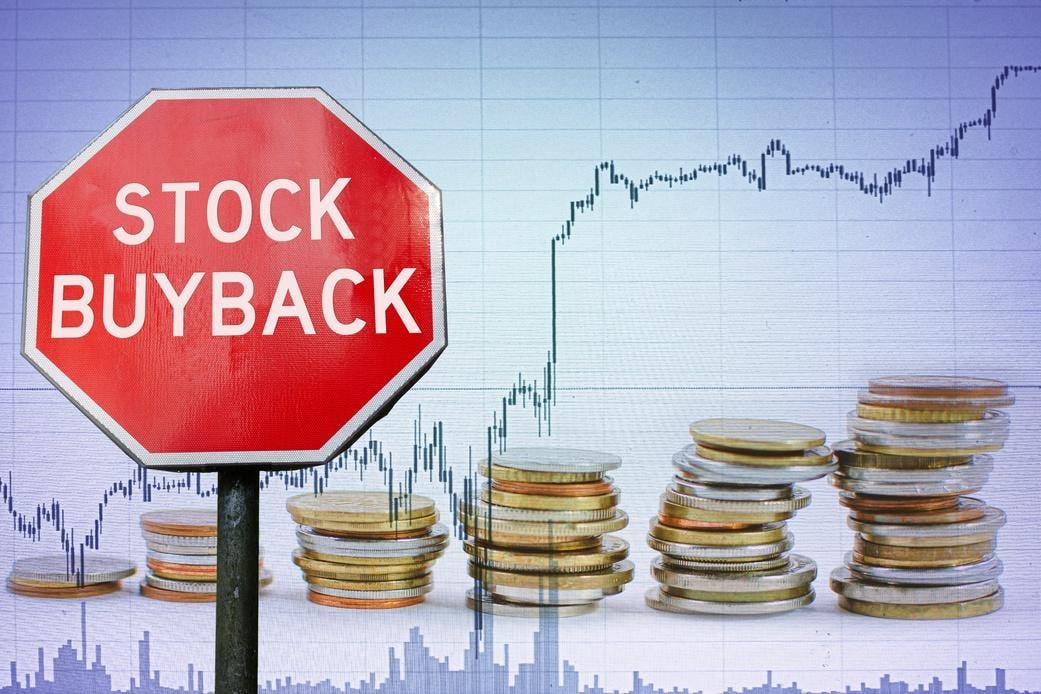
Stock buybacks have become one of the most controversial corporate finance practices of the last 20 years. Supporters argue that buybacks return excess cash to shareholders efficiently and signal management confidence. Critics counter that they inflate share prices, enrich executives, and starve companies of long-term investment. So what does the data actually say?
To answer that, we need to move beyond ideology and look at two decades of S&P 500 behavior, from the early 2000s through the post-pandemic era.
The Rise of Buybacks
Since the early 2000s, U.S. corporations have increasingly favored share repurchases over dividends. After SEC Rule 10b-18 clarified safe-harbor rules, buybacks exploded. By the 2010s, S&P 500 companies were returning more capital via buybacks than dividends, with annual totals often exceeding $700 billion.
Several factors drove this trend:
- Lower corporate taxes and abundant cash
- Stock-based executive compensation
- Buybacks’ flexibility compared to dividends
- Historically low interest rates enabling debt-financed repurchases
The Core Question: Value Creation or Financial Engineering?
At a surface level, buybacks mechanically boost earnings per share (EPS) by reducing the share count. But EPS growth alone does not equal value creation. The real question is whether buybacks improve total shareholder return (TSR) over long horizons.
Looking at S&P 500 firms from 2003–2023, several patterns emerge:
1. Buybacks correlate with higher returns—but context matters
On average, companies that consistently repurchased shares outperformed the index. However, this correlation weakens after controlling for:
- Profitability
- Free cash flow
- Industry
- Balance sheet strength
In other words, strong companies buy back shares, not necessarily the other way around. Buybacks tend to be a symptom of business strength, not the source of it.
Timing Is the Hidden Variable
One of the most underappreciated findings in buyback research is timing inefficiency.
Aggregate data shows that companies tend to:
- Buy back aggressively near market peaks
- Pull back during downturns, when shares are cheaper
For example:
- Buybacks peaked in 2007, just before the financial crisis
- Collapsed in 2009, near market lows
- Surged again in 2021, during elevated valuations
From a capital allocation perspective, this is almost perfectly backward.
Studies tracking buybacks relative to valuation multiples show that value-disciplined repurchases (buying when stocks are undervalued) are associated with strong long-term returns, while pro-cyclical buybacks destroy value.
Debt-Funded Buybacks: A Red Flag
Another critical distinction is how buybacks are financed.
Over the last 20 years:
- Many firms funded repurchases using cheap debt
- Corporate leverage ratios increased notably
- Balance sheet resilience declined in some sectors
Data from post-2008 and post-2020 periods show that companies entering downturns with high leverage from buybacks were:
- More likely to cut investment
- More likely to lay off workers
- More likely to suspend repurchases at the worst possible time
This weakens the argument that buybacks are always “shareholder friendly” — especially during stress periods.
Investment Trade-Offs: Are Buybacks Crowding Out Growth?
A common critique is that buybacks come at the expense of R&D, capex, and wages. The data paints a mixed picture:
- In tech and healthcare, high buybacks often coexist with high R&D
- In mature industries, buybacks often replace growth investment
- Firms with declining opportunities tend to buy back more shares
This suggests buybacks are not inherently harmful — but they often signal a lack of productive reinvestment opportunities.
What the Evidence Really Says
After two decades of S&P 500 data, the conclusion is nuanced:
Buybacks can boost long-term shareholder value if:
- The company generates excess free cash flow
- Shares are repurchased below intrinsic value
- Balance sheets remain strong
- Investment needs are already met
Buybacks destroy value when:
- Used to mask weak growth
- Funded by excessive debt
- Executed at market peaks
- Driven by short-term EPS incentives
In short, buybacks are a tool — not a strategy. Like any tool, outcomes depend on discipline, timing, and intent.
Bottom Line
Stock buybacks are neither heroes nor villains of modern capitalism. They reward shareholders when used intelligently and punish them when abused. The data doesn’t support blanket bans — but it strongly rejects the idea that buybacks are automatically good for long-term value.