Sanctions are often portrayed as blunt political instruments—a diplomatic scolding delivered in economic form. In public discourse, they are framed as symbolic punishments, gestures of disapproval meant to signal outrage or exert pressure. This framing badly understates their real power.
In practice, modern sanctions are not loud or dramatic. They are quiet, technical, and devastatingly effective. Rather than relying on direct state-to-state enforcement, they operate by weaponizing the private infrastructure of global commerce. Banks, insurers, shipping firms, and compliance departments become the frontline enforcers of foreign policy—often without firing a single shot.
Sanctions work not because governments police every transaction, but because no major private actor can afford to disobey them.
From Trade Embargoes to Financial Warfare
Historically, sanctions meant embargoes: explicit bans on trade between countries. These were leaky, slow, and easy to evade. Goods could be rerouted, re-labeled, or smuggled through intermediaries.
Modern sanctions are different. They target nodes, not borders. Instead of stopping ships at sea, they cut off access to the systems that make global trade possible in the first place.
The result is a form of financial warfare that is largely invisible to the public—but painfully visible to anyone trying to do business under its shadow.
Banking and Clearing: The Dollar Gatekeeper
At the center of the sanctions regime sits the global banking system.
Most international trade is denominated in U.S. dollars or euros. Even when two non-Western countries trade with each other, payments often pass through banks in New York, London, or Frankfurt. This happens via correspondent banking relationships, where local banks rely on large international banks to clear transactions in major currencies.
Sanctions exploit this structure.
When a country, company, or individual is sanctioned, Western authorities can prohibit banks from providing them access to dollar or euro clearing. In many cases, sanctioned entities are also cut off from the SWIFT messaging network, the standardized system banks use to communicate payment instructions.
This is not a minor inconvenience. Without access to correspondent banks, a financial institution is effectively locked out of the global economy.
The threat extends beyond the sanctioned party itself. If a bank in Dubai, Singapore, or Istanbul is caught facilitating transactions for a sanctioned entity, it risks losing its own access to dollar clearing. That penalty is often described as a financial death sentence—because no serious international bank can survive without the ability to transact in dollars.
Faced with this risk, banks do not wait for enforcement actions. They preemptively disengage.
Shipping and Insurance: Grounding the Global Fleet
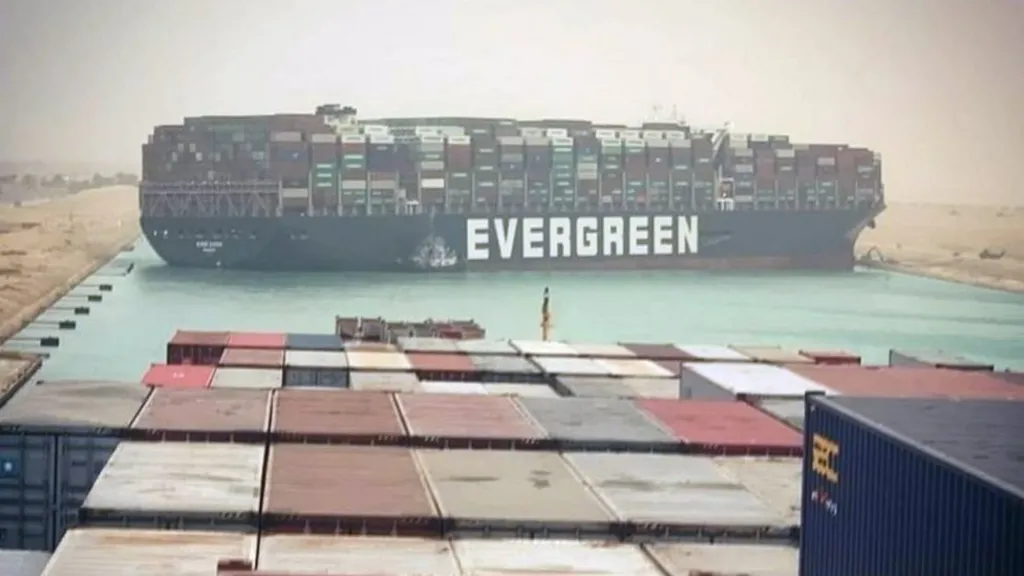
Trade does not move on balance sheets alone. It moves on ships. And ships do not move without insurance.
Every commercial vessel requires Protection and Indemnity (P&I) insurance, which covers liability for accidents, environmental damage, and crew claims. Without it, ports will not allow ships to dock, and counterparties will not accept cargo.
Here, too, sanctions leverage concentration.
The vast majority of global maritime insurance is provided by firms based in the United Kingdom and the European Union. By prohibiting insurers from covering vessels that transport sanctioned goods—such as oil, gas, or weapons—the West can effectively ground an entire fleet without intercepting a single ship.
Even if a buyer exists and a seller is willing, the transaction collapses if no insurer will underwrite the voyage.
Attempts to create alternative insurance systems have emerged, but they face credibility issues. Many ports, banks, and counterparties refuse to recognize coverage from untested or politically exposed insurers. Once again, private risk management reinforces public policy.
The Power of Over-Compliance
The most potent aspect of sanctions is not the written law. It is what regulators call the “chilling effect.”
Sanctions regimes are complex, constantly evolving, and often ambiguous. Violations can lead to massive fines, loss of licenses, and even criminal charges. For multinational corporations and financial institutions, the downside risk of a mistake is enormous.
As a result, firms tend to over-comply.
Banks close accounts. Shipping companies cancel routes. Exporters abandon entire regions. This happens even when the underlying activity—such as selling food, medicine, or humanitarian supplies—is technically legal.
The logic is simple: it is safer to do nothing than to do something wrong.
This over-compliance magnifies the impact of sanctions far beyond their formal scope. What begins as a targeted restriction becomes a broad economic freeze, enforced not by governments but by corporate legal departments.
Sanctions as a Network Weapon
What makes sanctions uniquely powerful is their reliance on network effects.
Global finance, trade, and logistics are not decentralized in the way they appear. They are built around a handful of trusted hubs: major currencies, legal systems, insurers, and clearing banks. Sanctions exploit this centralization.
By controlling access to the network, policymakers can impose costs that scale exponentially. One rule change in Washington or Brussels can ripple through thousands of private institutions across the world.
Importantly, this power does not require universal cooperation. Even countries that oppose sanctions often find themselves constrained by them, because their companies and banks still need access to Western-controlled infrastructure.
This is why sanctions are often described as “extraterritorial.” They reach far beyond the borders of the countries that impose them.
Limits and Adaptation
None of this means sanctions are omnipotent.
Targeted countries adapt. They use intermediaries, barter arrangements, shadow fleets, alternative payment systems, and discounted pricing. Over time, some economic activity resumes—albeit at higher cost and lower efficiency.
Sanctions also produce unintended consequences. They can entrench political elites, distort incentives, and accelerate the search for alternatives to Western-dominated systems.
But adaptation does not negate impact. It merely changes the shape of the damage.
Sanctions rarely collapse economies overnight. Instead, they raise friction everywhere—in payments, logistics, financing, and planning. Growth slows. Investment dries up. Living standards erode. The pain is cumulative.
The Private Sector as Policeman
Perhaps the most striking feature of modern sanctions is how little direct enforcement they require.
Governments set the rules. The private sector enforces them—out of self-interest.
Banks monitor transactions. Insurers screen clients. Shipping firms track cargo. Technology companies block access. Lawyers and compliance officers become gatekeepers of geopolitics.
This outsourcing of enforcement makes sanctions both scalable and politically palatable. There are no blockades, no troop deployments, no dramatic confrontations. Yet the economic pressure can rival that of traditional warfare.
The Bigger Picture
Sanctions are not symbolic gestures. They are a sophisticated mechanism for exerting power in an interconnected world.
Their effectiveness lies not in moral condemnation, but in structural leverage—control over the invisible systems that make modern life function. Money does not move. Ships do not sail. Contracts do not clear.
And perhaps most importantly, fear does the rest.
In the end, sanctions work not because everyone agrees with them, but because no major actor can afford to ignore them. That is the invisible web—and once caught in it, escape is far harder than the headlines suggest.