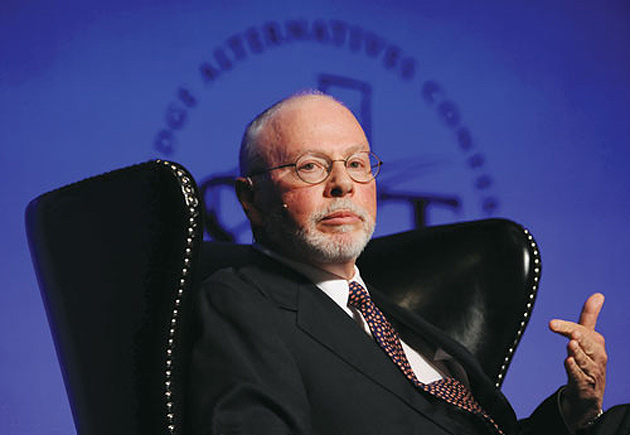
Paul Elliott Singer is one of the most influential — and controversial — figures in modern finance. As the founder, president, and co-chief executive officer of Elliott Management, Singer helped pioneer activist and distressed-debt investing, turning a small hedge fund launched in the 1970s into a global powerhouse managing more than $70 billion in assets. Known for his uncompromising legal strategies, intense focus on risk management, and willingness to confront corporations and sovereign governments alike, Singer has built a reputation as one of Wall Street’s toughest operators.
To admirers, he is a disciplined investor who enforces financial accountability. To critics, he is the archetype of the “vulture capitalist.” Either way, Singer’s impact on hedge fund strategy, corporate governance, and sovereign debt markets is undeniable.
Early Life and Education
Paul Singer was born on August 22, 1944, in Teaneck, New Jersey. He grew up in a middle-class household, the son of a pharmacist and a homemaker. His early life was not marked by inherited wealth or elite financial connections, but by academic achievement and a strong work ethic.
Singer earned a bachelor’s degree in psychology from the University of Rochester before going on to receive a Juris Doctor degree from Harvard Law School. His legal training would later become a defining element of his investment style, particularly in his aggressive use of courts to pursue debt repayment and enforce contractual obligations.
After law school, Singer worked as a real estate attorney at the investment bank Donaldson, Lufkin & Jenrette. This exposure to finance and complex transactions helped shape his understanding of markets and risk, setting the stage for his entrepreneurial leap.
Founding Elliott Management
In 1977, Singer founded Elliott Associates with just $1.3 million raised from friends and family. At the time, hedge funds were still a relatively small and lightly regulated segment of finance. Singer initially focused on convertible arbitrage, a strategy involving the simultaneous purchase of convertible securities and short selling of the underlying stock to exploit pricing inefficiencies.
Over time, Elliott evolved into a multi-strategy firm, expanding into distressed debt, event-driven investing, and activist equity campaigns. The firm’s culture became defined by rigorous risk controls, legal sophistication, and a willingness to pursue complex, long-duration battles if the potential returns justified the effort.
One of Singer’s defining traits is his extreme aversion to large drawdowns. Elliott has reported only a handful of losing years over nearly five decades — a remarkable record in the volatile hedge fund industry. This conservative approach to risk, combined with aggressive pursuit of upside, helped attract institutional investors and fuel Elliott’s growth.
The Pioneer of Sovereign Debt Activism
Singer became internationally famous — and infamous — for Elliott’s role in sovereign debt disputes. Through affiliates such as NML Capital, Elliott purchased defaulted government bonds at steep discounts and then pursued full repayment through litigation.
The most famous example was Argentina. After Argentina defaulted on its debt in 2001, Elliott bought distressed bonds and refused to participate in debt restructuring deals that offered reduced payouts. Instead, the firm pursued legal action for more than a decade. The battle culminated in 2016, when Argentina agreed to pay Elliott and other holdout creditors roughly $2.4 billion.
Similar strategies were used against Peru and the Republic of Congo, generating enormous returns for Elliott. Supporters argue these tactics enforce market discipline and discourage irresponsible borrowing. Critics argue they undermine debt relief efforts for developing countries and prioritize profits over humanitarian concerns.
These cases cemented Singer’s reputation as one of the most feared players in global finance.
Corporate Activism and Boardroom Power
Beyond sovereign debt, Elliott became one of the world’s leading activist investors. The firm takes significant stakes in public companies and pressures management to make changes designed to boost shareholder value. These campaigns often involve board replacements, asset sales, restructuring, or changes in capital allocation.
Elliott has targeted some of the world’s largest corporations, including Twitter, SoftBank, BP, Starbucks, AT&T, Citrix, and many others. In some cases, Elliott operates quietly behind the scenes. In others, it wages high-profile proxy battles and public campaigns.
Singer’s firm is known for its deep research, legal preparation, and relentless negotiation tactics. Corporate executives often describe Elliott as one of the most formidable activist investors, capable of sustaining pressure for years.
While many campaigns have delivered strong short-term stock gains, critics argue that activist strategies can emphasize financial engineering over long-term investment, innovation, and employee stability. Supporters counter that activism improves accountability and corrects inefficient management.
AC Milan and Unconventional Investments
Elliott’s reach has extended beyond traditional corporate targets. In 2018, Elliott took control of Italian football club AC Milan after the club’s previous owner defaulted on loans provided by the firm. Under Elliott’s ownership, AC Milan underwent financial restructuring and operational changes.
In 2022, Elliott sold the club to RedBird Capital Partners for approximately $1.2 billion, marking a highly profitable and unusual investment for a hedge fund. The episode demonstrated Elliott’s willingness to apply financial discipline even in industries far removed from Wall Street.
Politics and Philanthropy
Singer is a major political donor and an influential figure in Republican Party fundraising. He has supported conservative economic policies, opposed certain financial regulations, and funded think tanks such as the Manhattan Institute for Policy Research, where he serves as chairman emeritus.
At the same time, Singer is notable for supporting LGBTQ rights and has funded organizations advocating for same-sex marriage — a relatively uncommon position among major Republican donors. He is also a strong supporter of Jewish and pro-Israel causes.
Through the Paul E. Singer Foundation, he has donated hundreds of millions of dollars to education, policy research, civil society organizations, and humanitarian causes. Singer is also a signatory of the Giving Pledge, committing to give away a substantial portion of his wealth.
Legacy and Reputation
As of 2026, Forbes estimates Paul Singer’s net worth at approximately $6.7 billion. Elliott Management oversees roughly $70–75 billion in assets, making it one of the largest activist hedge funds in the world.
Singer’s legacy is deeply polarizing. To supporters, he is a principled enforcer of contracts and a master of risk-controlled investing. To critics, he embodies the excesses of financial capitalism, using legal and financial power to extract value at the expense of weaker counterparties.
What is not in dispute is his influence. Paul Singer helped shape the modern activist hedge fund model and demonstrated how legal strategy, financial engineering, and persistence can be combined into a formidable investment machine. In doing so, he permanently altered how corporations and governments think about debt, governance, and accountability.