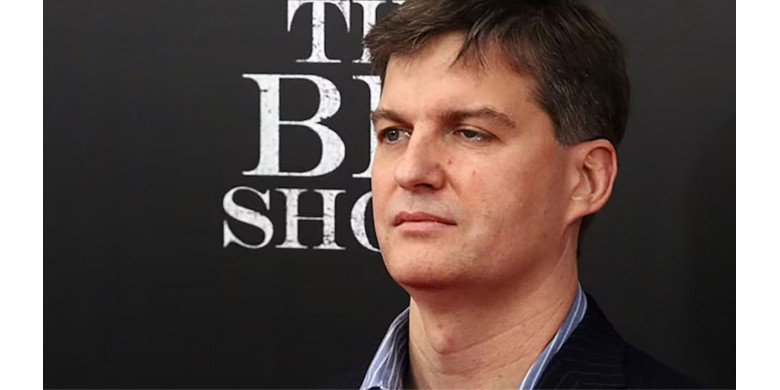
Michael Burry is a name etched in the annals of financial history as one of the most prescient investors of his generation. Known for his contrarian mindset and deep analytical rigor, Burry famously foresaw the 2008 housing market collapse and profited handsomely by betting against the subprime mortgage market. His story is one of intellectual independence, unconventional thinking, and a relentless pursuit of truth in the complex world of finance.
Early Life and Education
Michael James Burry was born on June 19, 1971, in San Jose, California. From an early age, Burry exhibited a strong intellectual curiosity and a passion for learning. He was diagnosed with Asperger’s syndrome, a form of autism spectrum disorder, which shaped his unique way of thinking and processing information. This condition contributed to his intense focus and ability to analyze data with extraordinary detail.
Burry attended the University of California, Los Angeles (UCLA), where he earned a degree in economics and pre-med. Initially, he pursued a career in medicine and enrolled at the Vanderbilt University School of Medicine. However, his passion for investing and financial markets soon took precedence, leading him to leave medical school to focus on his investment career.
Early Career and Investment Philosophy
Burry began his investment journey by managing a personal portfolio, applying a value investing approach inspired by Benjamin Graham and Warren Buffett. He was known for his meticulous research and willingness to take positions that others overlooked or dismissed. His early success came from identifying undervalued stocks and patiently waiting for the market to recognize their true worth.
In 2000, Burry founded Scion Capital, a hedge fund that allowed him to manage outside capital and expand his investment strategies. His approach was deeply analytical, relying on fundamental research and a contrarian perspective that often put him at odds with mainstream market sentiment.
The 2008 Financial Crisis: Burry’s Defining Moment
Michael Burry’s most famous and career-defining move came in the mid-2000s when he began to investigate the burgeoning subprime mortgage market. Through exhaustive analysis of mortgage-backed securities and loan-level data, Burry identified a looming crisis: the housing market was built on risky loans that were likely to default once interest rates rose and housing prices stagnated.
While many investors remained bullish on the housing market, Burry took a bold and unconventional step. He persuaded several large investment banks to sell him credit default swaps (CDS) — essentially insurance contracts betting against the mortgage bonds. This position was highly controversial and initially costly, as the market continued to rise despite his warnings.
Burry’s conviction and patience paid off spectacularly when the housing bubble burst in 2007-2008, triggering a global financial crisis. His fund generated enormous profits, reportedly earning hundreds of millions of dollars for his investors and himself. This prescient bet against the market made him a legend in the investment community and was later popularized in Michael Lewis’s bestselling book, “The Big Short,” and its acclaimed film adaptation.
Post-Crisis Career and Philosophy
After closing Scion Capital in 2008, Burry took a step back from managing outside money, focusing instead on personal investments and other ventures. He returned to managing outside capital in 2013 with Scion Asset Management, continuing to apply his rigorous research and value-oriented approach.
Burry’s investment philosophy remains grounded in deep fundamental analysis, a willingness to challenge consensus, and a focus on long-term value. He is known for his skepticism of market hype and his preference for investments that others overlook or undervalue. His approach combines quantitative analysis with a keen understanding of human psychology and market dynamics.
Influence and Legacy
Michael Burry’s impact on finance extends beyond his financial success. He has become a symbol of independent thinking and intellectual courage in investing. His story highlights the importance of thorough research, conviction, and the ability to withstand pressure when taking contrarian positions.
Burry’s experience during the financial crisis also sparked broader discussions about the risks inherent in complex financial products and the need for greater transparency and regulation in the markets. His insights have influenced both investors and policymakers, underscoring the value of skepticism and critical analysis in financial decision-making.
Personal Life and Character
Michael Burry is known for his low-profile and private nature, often shunning the spotlight despite his fame. He is intensely focused on his work and is described by peers as highly intelligent, disciplined, and somewhat eccentric. His Asperger’s syndrome has been noted as a factor that contributes to his unique analytical abilities and his preference for solitude and deep concentration.
Burry’s personal interests include reading extensively on a wide range of topics, from economics and history to psychology and science. He is also known for his candid and sometimes unconventional views on markets and society, often sharing his thoughts through social media and interviews.
Conclusion
Michael Burry’s biography is a compelling narrative of a maverick investor who dared to see what others could not and acted decisively on his convictions. His journey from a medical student to a legendary hedge fund manager exemplifies the power of independent thinking, rigorous analysis, and resilience in the face of skepticism. Burry’s legacy is not only in the fortunes he made but in the lessons he imparted about the importance of questioning consensus, embracing complexity, and seeking truth in the ever-evolving world of finance.