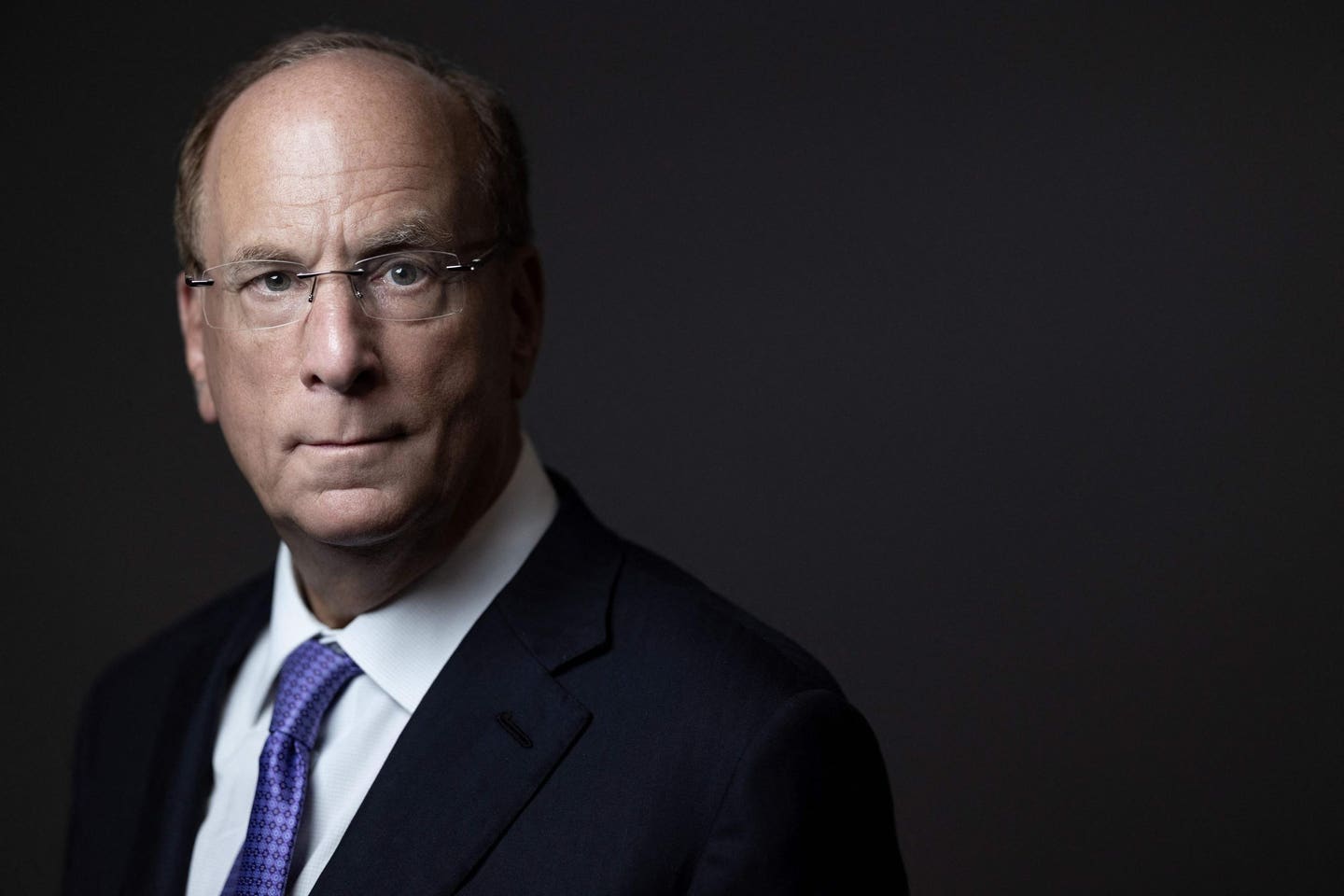
Larry Fink, the co-founder and CEO of BlackRock, stands as one of the most influential figures in finance today. With an estimated net worth exceeding $1 billion, Fink has helmed BlackRock, the world’s largest asset management firm, transforming it into a powerhouse that manages trillions in assets. His journey from a young bond trader to a financial titan reveals a narrative steeped in ambition, innovation, and a commitment to sustainable investing.
Early Life and Education
Lawrence Douglas Fink was born on November 2, 1952, in Van Nuys, California, into a Jewish family. His father owned a shoe store, while his mother was a teacher, providing Fink with a solid foundation of work ethic and community values. These early influences shaped his later views on leadership and responsibility.
Fink attended the University of California, Los Angeles (UCLA), where he earned a bachelor’s degree in political science in 1974. He later pursued a master’s degree in business administration at the University of California, Berkeley, graduating in 1976. His education armed him with a strong analytical framework and an understanding of market dynamics that would prove pivotal in his future endeavors.
Early Career
Fink’s career in finance began at First Boston, where he worked as a bond trader. His time there was marked by innovative thinking; he developed a new method for assessing the risk associated with mortgage-backed securities. However, in 1986, a $100 million loss from a trading issue forced Fink and his team to rethink traditional investment strategies.
Determined to learn from mistakes, Fink took his expertise to the next level. He joined the investment bank of BlackRock in 1988, a move that would change the trajectory of his career. Within two years, Fink helped lead the company in developing strategies focused on risk management. His success at BlackRock set the stage for a future that would redefine asset management.
Founding BlackRock
In 1988, Fink co-founded BlackRock alongside seven partners. The firm started as a risk management and fixed income firm, but Fink had a vision for expansion. His uncanny ability to identify market trends allowed BlackRock to diversify its offerings and grow rapidly. By blending risk management with investment strategy, Fink positioned BlackRock as a trusted advisor in an increasingly complex financial landscape.
Fink became CEO in 2001, and under his leadership, BlackRock flourished. The firm transitioned from its initial focus on fixed income to a broader range of investment strategies, including equities, alternatives, and multi-asset investments. Fink’s approach incorporated a commitment to transparency and client satisfaction, fostering a corporate culture centered on integrity and innovation.
Navigating Market Changes
One of Fink’s notable achievements came during the financial crisis of 2008. As many financial institutions floundered, BlackRock’s robust risk management protocols allowed it to navigate the turbulence with relative ease. The firm acquired several distressed assets and companies, elevating its standing in the industry. The government sought BlackRock’s expertise to manage toxic assets from failing financial institutions, showcasing Fink’s influence on a national scale.
His reputation solidified, Fink began to embrace a new ethos in investment: sustainability. He recognized that environmental, social, and governance (ESG) factors would shape future investment landscapes. In 2018, Fink’s annual letter to CEOs articulated this philosophy, emphasizing that companies must contribute positively to society and consider their broader impact. This landmark moment shifted focus toward sustainable investing, influencing countless firms and investment strategies globally.
The Rise of ESG Investing
Fink’s advocacy for ESG investing marked a turning point not just for BlackRock, but for the entire financial industry. He believed that sustainable practices are not merely ethical imperatives but also sound investment strategies. Under his guidance, BlackRock integrated ESG considerations into its investment processes, offering a wide array of sustainable investment products to meet growing demand.
In 2020, acknowledging the climate crisis, he famously stated that “climate risk is investment risk.” This statement underscored a fundamental shift in how investors should approach their portfolios. BlackRock’s assets under management surged, driven by the firm’s commitment to sustainable practices and its responsiveness to investor demands.
Philanthropy and Leadership
Beyond his role as a financial leader, Fink is also a committed philanthropist. He has contributed to various causes, focusing particularly on education and community development. Fink’s dedication to corporate responsibility extends into his leadership style, which emphasizes mentorship and growth for his employees. He believes a leader should inspire confidence and foster an environment where innovative ideas thrive.
Fink’s influence extends beyond finance into various domains, including public policy and education. He serves on several boards and advisory committees, lending his expertise to discussions on economic policy and sustainability.
Personal Life
Larry Fink is married to his college sweetheart, and the couple has three children. They reside in New York City, where they enjoy a life marked by both professional accomplishments and personal fulfillment. Fink’s interests include art—he is an avid art collector—as well as cooking, reflecting a well-rounded personality that values creativity and tradition.
Conclusion
Larry Fink’s trajectory from a young trader to the helm of BlackRock illustrates not only an extraordinary career but also a deep commitment to shaping the financial world for future generations. His focus on risk management, sustainability, and corporate responsibility has inspired a seismic shift in investment philosophy, influencing countless investors and firms.
As the architect of financial influence, Larry Fink continues to play a critical role in the world of finance, advocating for a more sustainable, equitable approach to investing. His legacy is not just one of financial success but of a vision that recognizes the interconnectedness of economics and society. The story of Larry Fink serves as a testament to the power of innovative thinking and ethical responsibility in the relentless pursuit of excellence.